
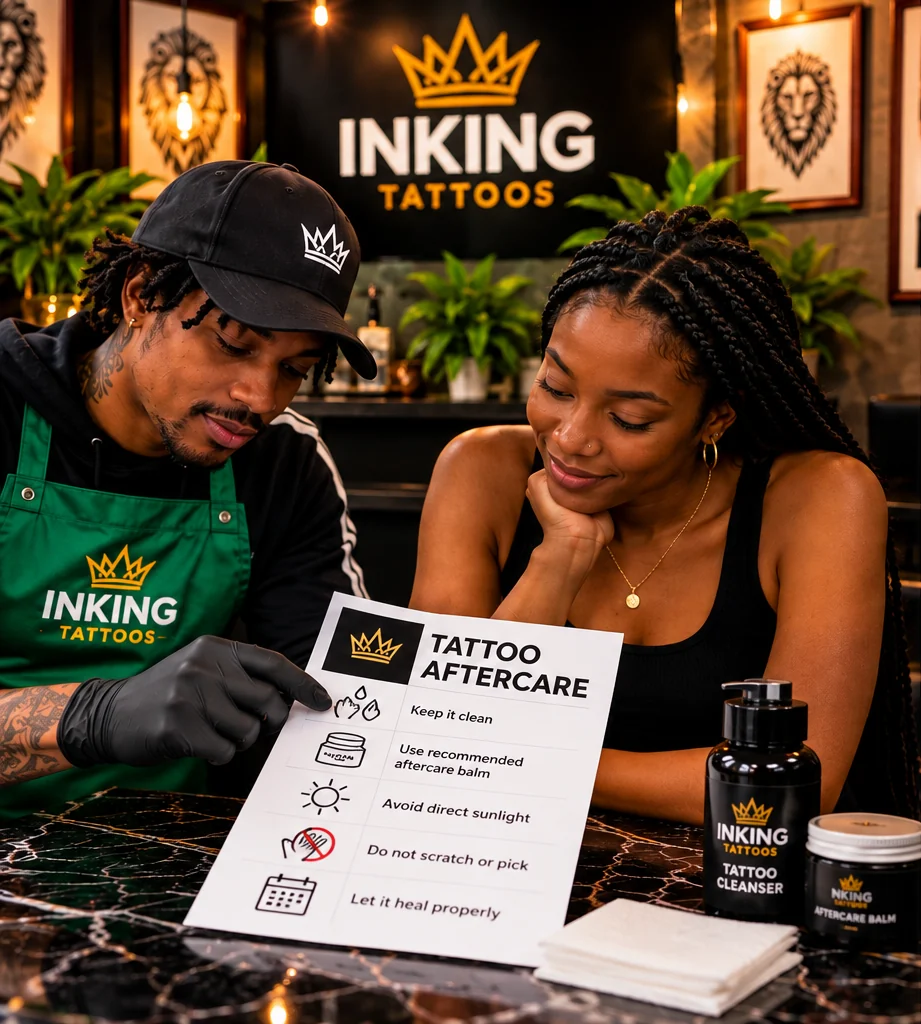
Start with the instructions for your specific tattoo
Aftercare begins with the instructions provided by the tattoo artist. The covering used, the tattoo's location and the circumstances of the session can affect what you need to do first, so there is no single dressing-removal timetable that should be applied to every tattoo.
Follow the guidance you were given for how long to keep any covering in place, how to remove or change it and how to clean the area. If the instructions are unclear, ask the artist to explain them rather than guessing from a video or another person's experience.
Online advice can be useful for understanding general principles, but it cannot know which covering was used or what instructions were given for your tattoo. When advice conflicts, clarify your own instructions with the artist or an appropriate healthcare professional.
What a fresh tattoo needs during healing
A new tattoo is healing skin. The practical goal of aftercare is to keep the area appropriately clean, avoid unnecessary friction or picking, and follow the specific instructions you received.
Do not treat the tattoo as fully healed just because the session has ended or the surface begins to look calmer. Healing takes time, and the appearance of the skin can change as it recovers.
Avoid repeatedly touching the tattoo to check it. Wash your hands before necessary contact, follow the cleaning instructions you were given and let the area recover without unnecessary interference.
Wash your hands before caring for the tattoo
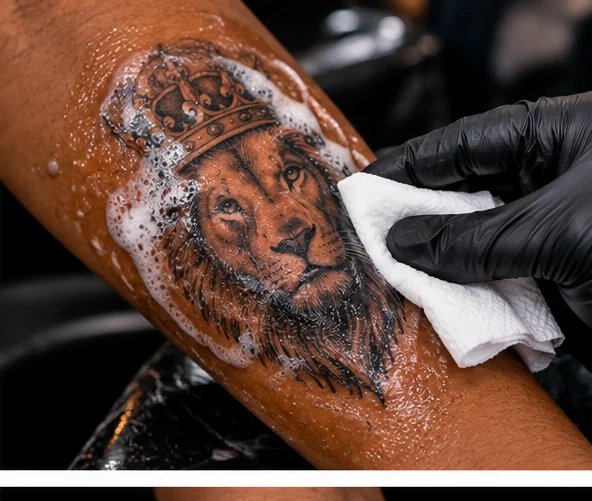
Clean hands are a simple but important part of caring for a healing tattoo. Before touching the area to clean it or follow your artist's instructions, wash your hands first.
Use the cleaning method and products recommended in your aftercare instructions. Be gentle rather than scrubbing the tattoo, and avoid introducing products or home remedies simply because someone online recommends them.
If a product causes a concerning reaction or you are unsure whether it is suitable, stop guessing and seek clarification from the artist or a healthcare professional as appropriate. Do not use harsh household cleaners, alcohol or other improvised substances on the tattoo unless a qualified professional has specifically directed you to do so.
Do not pick, scratch or pull at healing skin
As the tattoo heals, the surface may feel dry, itchy or begin to flake. Resist the temptation to scratch, peel or pull at the skin. Picking at the area can irritate it and interfere with the healing process.
Avoid rubbing the tattoo with towels, clothing or other materials. Pat or handle the area only as directed in your aftercare instructions, and allow naturally occurring flaking to resolve without forcing it.
If itching or discomfort becomes severe, worsens or comes with other concerning symptoms, do not assume it is simply part of healing. Ask an appropriate healthcare professional for advice.
Clothing, bedding and everyday contact
Think about what will touch the tattoo during an ordinary day. Choose clean clothing and avoid unnecessary rubbing, tight pressure or repeated friction against the area where possible.
Consider the location when planning work and sleep. A tattoo in an area that presses against bedding, straps or work clothing may need a little more thought about how you move and dress during the healing period.
Do not apply a new wrap or dressing based on guesswork. Follow the covering instructions you were given and ask for clarification if you are unsure whether the tattoo should be covered for a particular activity.
Showering is different from swimming or soaking
Follow your artist's directions for washing and showering. Brief, careful cleaning as directed is not the same as leaving a fresh tattoo submerged in water for an extended period.
Avoid swimming and prolonged soaking while the tattoo is healing. That includes considering pools, lakes, rivers, hot tubs and other water environments as activities to postpone until healing is complete and you have appropriate guidance.
If you have a trip or swimming event coming up, think about the timing before getting tattooed. It is easier to plan a session around an activity than to try to fit a healing tattoo into a schedule that involves water.
Plan before your tattoo session →Think through timing and practical arrangements before getting tattooed.
Plan around Kenya's sun and outdoor activities
Strong sunlight and outdoor routines are practical considerations when caring for a new tattoo in Kenya. While the tattoo is healing, follow your aftercare instructions for protecting the area and avoid unnecessary direct sun exposure.
Do not assume sunscreen should be applied to a fresh tattoo. Follow the guidance you receive about products and wait until the tattoo is healed before relying on normal sun-protection routines for the tattooed skin.
If your work or daily travel means you spend a lot of time outdoors, consider that before choosing your session date. Clothing or other appropriate protection may be relevant, provided it does not create friction or conflict with the instructions you were given.
After the tattoo has fully healed, sensible sun protection can help preserve the appearance of the tattooed skin. Ask a qualified professional if you are unsure when it is appropriate to resume using a particular product.
Exercise, work and travel during healing
Your routine matters. Work that causes repeated friction, heavy sweating, contact with dirty environments or pressure on the tattoo may require planning while the skin heals.
Do not assume every activity is either completely safe or completely forbidden for every tattoo. The location, size, your work and the instructions you were given all matter. Ask for guidance specific to your situation if you are unsure.
Travel can make aftercare more complicated if you have limited access to clean supplies or expect swimming and outdoor activities. If you can, choose a session date that gives you enough space to follow the instructions without rushing between competing plans.
Moisturizers and other products: do not improvise
People often receive conflicting advice about ointments, moisturizers, soaps and other products. Avoid assuming that more product is always better or that a product suitable for one person's tattoo is automatically right for yours.
Use only the products and routine recommended in the instructions for your tattoo. If the artist recommended a particular approach and you cannot remember the details, ask for clarification instead of layering several products together.
If you suspect a product is causing irritation, or if you develop a rash or symptoms that concern you, seek appropriate advice. An article cannot identify the cause of a skin reaction from a description alone.
Make an aftercare plan that fits your routine
Before the session, think about the next few days: work clothing, travel, exercise, outdoor time and any plans involving swimming or soaking. You do not need to predict every detail, but knowing your routine helps you ask practical questions before the tattoo is done.
Keep the aftercare instructions somewhere you can refer to them, and make sure you understand what to do with the covering, how to clean the area and which products—if any—you have been advised to use. If anything is unclear, ask the artist to explain it before you leave.
Avoid relying on a rigid day-by-day timetable from a generic article. The tattoo's location, the covering used and your own healing can affect what is appropriate. Follow the instructions for your tattoo and get medical advice for symptoms that worsen or concern you.
Read the swimming guidance →Plan around swimming and avoid submerging a healing tattoo.
Understand the difference between healing and warning signs
Some tenderness and changes in appearance can occur while skin heals, but an online guide cannot reliably determine whether a particular tattoo is healing normally. Pay attention to symptoms that worsen rather than gradually improve.
Seek medical advice if you notice worsening redness, swelling, warmth or pain, discharge, fever or feel generally unwell. If symptoms are severe or rapidly progressing, seek urgent medical care.
Do not wait for an artist or an online article to diagnose a possible infection. Tattoo artists can clarify their aftercare instructions, but they are not a substitute for a healthcare professional when you may have a medical problem.
If you have a known medical concern or are unsure whether a symptom is serious, choose professional medical advice rather than relying on photographs or comments on social media.
Common aftercare mistakes to avoid
One mistake is following a stranger's routine without checking whether it matches the instructions for your tattoo. Another is removing or replacing a covering based on a guess instead of the directions you were given.
Other avoidable problems include scratching or peeling the skin, using unrecommended products, exposing the tattoo to swimming or prolonged soaking before healing, and allowing repeated friction where it can be avoided.
A further mistake is ignoring symptoms because you assume every change is normal. If symptoms become worse or you feel unwell, get appropriate medical advice.
The safest general approach is simple: follow your specific instructions, keep the area clean as directed, avoid unnecessary irritation and ask for help when something is unclear.
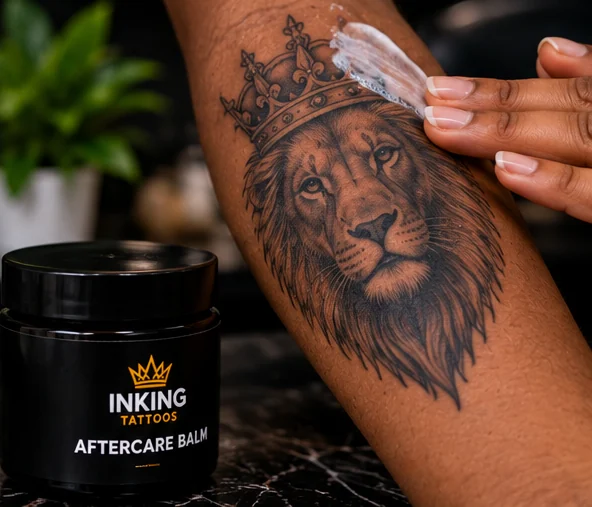
A simple daily check without overhandling the tattoo
Keep the check brief and avoid touching the tattoo unnecessarily. Notice whether the area is generally settling or whether redness, swelling, warmth or pain is getting worse. You do not need to repeatedly inspect, press or photograph the skin to follow your aftercare routine.
Check that you are still following the instructions you were given: use the advised cleaning routine, avoid picking or friction, and keep away from swimming or prolonged soaking until healing is complete. Do not add products or change the routine just because a social-media post recommends something different.
Appearance alone cannot confirm that a tattoo is healing normally. If symptoms worsen, you notice discharge or develop a fever or feel unwell, seek medical advice. Severe or rapidly progressing symptoms need urgent medical attention.
Aftercare questions to ask before leaving the session
Make sure you know how to handle any covering, when and how to clean the tattoo, which products to use if any were recommended, and what activities to avoid while it heals.
Ask how to get clarification if you forget an instruction. If you work outdoors, exercise frequently or have travel and swimming plans, mention those practical circumstances so you can plan appropriately.
You do not need to memorize a complicated routine. You do need to understand the instructions that apply to your tattoo and know when to seek professional medical help instead of trying to manage a concerning symptom yourself.
Aftercare in Limuru and when contacting Jay helps
If Jay tattooed you and you are unsure about an instruction he provided, contact Inking Tattoos for clarification about that instruction. It is better to ask a direct question than to improvise with a product or routine you have not discussed.
For symptoms that may indicate infection or another medical problem, contact an appropriate healthcare professional. Do not delay medical care while waiting for a reply from the studio.
Keep the question specific: explain which instruction is unclear or which part of the routine you are unsure about. For a health concern, describe the symptoms to a healthcare professional rather than relying on the tattoo artist to diagnose them.
Frequently asked questions about tattoo aftercare
How long should I keep a tattoo covering on? Follow the instructions for the covering used on your tattoo. There is no single timetable that applies to every dressing.
Can I swim with a fresh tattoo? Avoid swimming and prolonged soaking while it is healing. Plan water activities for after healing and follow appropriate guidance.
Can I expose a new tattoo to the sun? Avoid unnecessary direct sun exposure while it heals and follow your aftercare instructions for protection. Ask before applying products to healing skin.
Should I scratch or peel flaky skin? No. Avoid scratching, picking or pulling at healing skin.
What products should I use? Follow the routine and product advice given for your tattoo. Do not combine improvised remedies or products because of online recommendations.
What symptoms need medical attention? Worsening redness, swelling, warmth or pain, discharge, fever or feeling generally unwell are reasons to seek medical advice. Severe or rapidly progressing symptoms need urgent attention.
Can I ask Jay about aftercare? Yes, for clarification of the instructions provided by the studio. For possible infection or other medical concerns, consult a healthcare professional.
What if I have swimming or travel planned? Consider the timing before your tattoo session and avoid activities that conflict with the aftercare instructions while the tattoo heals.
The main rule: follow the instructions and get help when needed
Good aftercare is not about copying a complicated routine from the internet. It is about understanding the instructions for your tattoo, keeping the area clean as directed, avoiding unnecessary irritation and giving the skin time to heal.
Plan around swimming, sun exposure, clothing and your daily routine. If an instruction is unclear, ask the artist to clarify it. If symptoms worsen or suggest a medical problem, seek appropriate healthcare advice rather than diagnosing yourself from an article.
If Jay tattooed you and you need the studio's instructions clarified, contact Inking Tattoos directly. For medical concerns, prioritize professional healthcare.
Read the first-tattoo guide →Review the broader decisions and preparation involved in getting a first tattoo.